Quick Answer: What Are the Most Traded Currency Pairs?
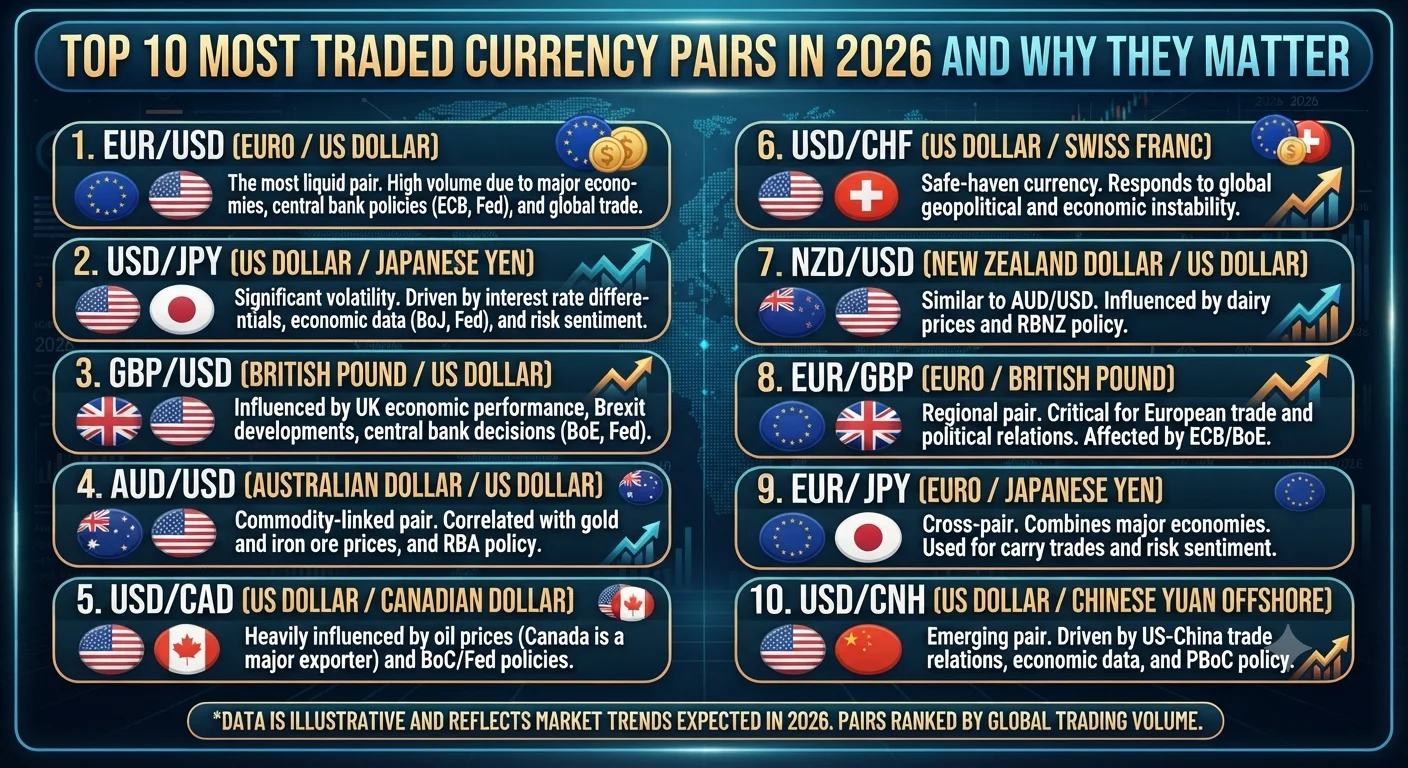
The most traded currency pairs in 2026 are the seven major pairs: EUR/USD, USD/JPY, GBP/USD, USD/CHF, AUD/USD, USD/CAD, and NZD/USD, all of which include the US dollar on one side. These are followed by the most liquid minor pairs, including EUR/GBP, EUR/JPY, and GBP/JPY. Together, these ten pairs account for the vast majority of the $7.5 trillion in daily forex market turnover reported by the Bank for International Settlements.
Introduction
- Quick Answer: What Are the Most Traded Currency Pairs?
- Introduction
- What Are Currency Pairs and How Are They Classified?
- Major Pairs: The Most Liquid Markets in the World
- EUR/USD: The World's Most Traded Currency Pair
- USD/JPY: The Asian Session Powerhouse
- GBP/USD: Cable's Volatility and Opportunity
- USD/CHF: The Safe-Haven Pair
- AUD/USD and NZD/USD: The Commodity-Linked Majors
- USD/CAD: The Petrocurrency Pair
- Most Traded Minor Pairs
- EUR/GBP: The European Cross
- EUR/JPY: The Risk Sentiment Barometer
- GBP/JPY: The "Dragon" of Currency Trading
- Which Currency Pair Is Best for Beginners in 2026?
- Key Takeaways
- Frequently Asked Questions
The forex market contains hundreds of tradable currency pairs, from the hyper-liquid EUR/USD to exotic pairings between minor emerging market currencies that barely trade a few million dollars per day. But not all currency pairs are created equal. The differences in liquidity, spread costs, volatility profiles, fundamental drivers, and trading session activity between the major pairs and less liquid alternatives are substantial enough to significantly affect both the quality of available trading opportunities and the transaction costs incurred.
For most traders, the practical universe of currency pairs worth trading regularly is narrower than the full list of available instruments. Understanding which pairs are most traded, why they carry that liquidity, what unique characteristics define each one, and which trading sessions and conditions they perform best in is foundational knowledge that shapes every subsequent trading decision.
This guide covers the ten most traded currency pairs in 2026 in detail, including the fundamental factors that drive each pair, the typical spread and volatility characteristics traders encounter, and a practical assessment of which pairs suit different trader types and experience levels.
What Are Currency Pairs and How Are They Classified?
A currency pair is the quotation of one currency against another. The first currency listed is the base currency and the second is the quote currency. The exchange rate tells you how many units of the quote currency are required to purchase one unit of the base currency.
Currency pairs are classified into three tiers based on their liquidity and the currencies involved:
Major pairs include the US dollar on one side and are paired with one of the six other most significant global currencies. They are the most liquid and most heavily traded pairs in the market. Major pairs carry the tightest spreads and the highest volume of analytical coverage and trader activity.
Minor pairs (also called cross pairs) pair two major currencies without including the US dollar. Examples include EUR/GBP, EUR/JPY, and GBP/JPY. They typically carry slightly wider spreads than the major pairs but still offer substantial liquidity and trading opportunity.
Exotic pairs pair a major currency with a currency from an emerging or smaller economy, such as USD/TRY (US dollar vs Turkish lira), USD/ZAR (US dollar vs South African rand), or EUR/PLN (euro vs Polish zloty). Exotic pairs carry significantly wider spreads, lower liquidity, and higher volatility, making them inappropriate for most beginner traders.
Major Pairs: The Most Liquid Markets in the World
EUR/USD: The World's Most Traded Currency Pair
EUR/USD, the exchange rate between the euro and the US dollar, is the most traded currency pair in the global forex market by a substantial margin. According to BIS Triennial Survey data, EUR/USD accounts for approximately 22 percent of total daily global forex turnover, representing over $1.5 trillion in daily transactions.
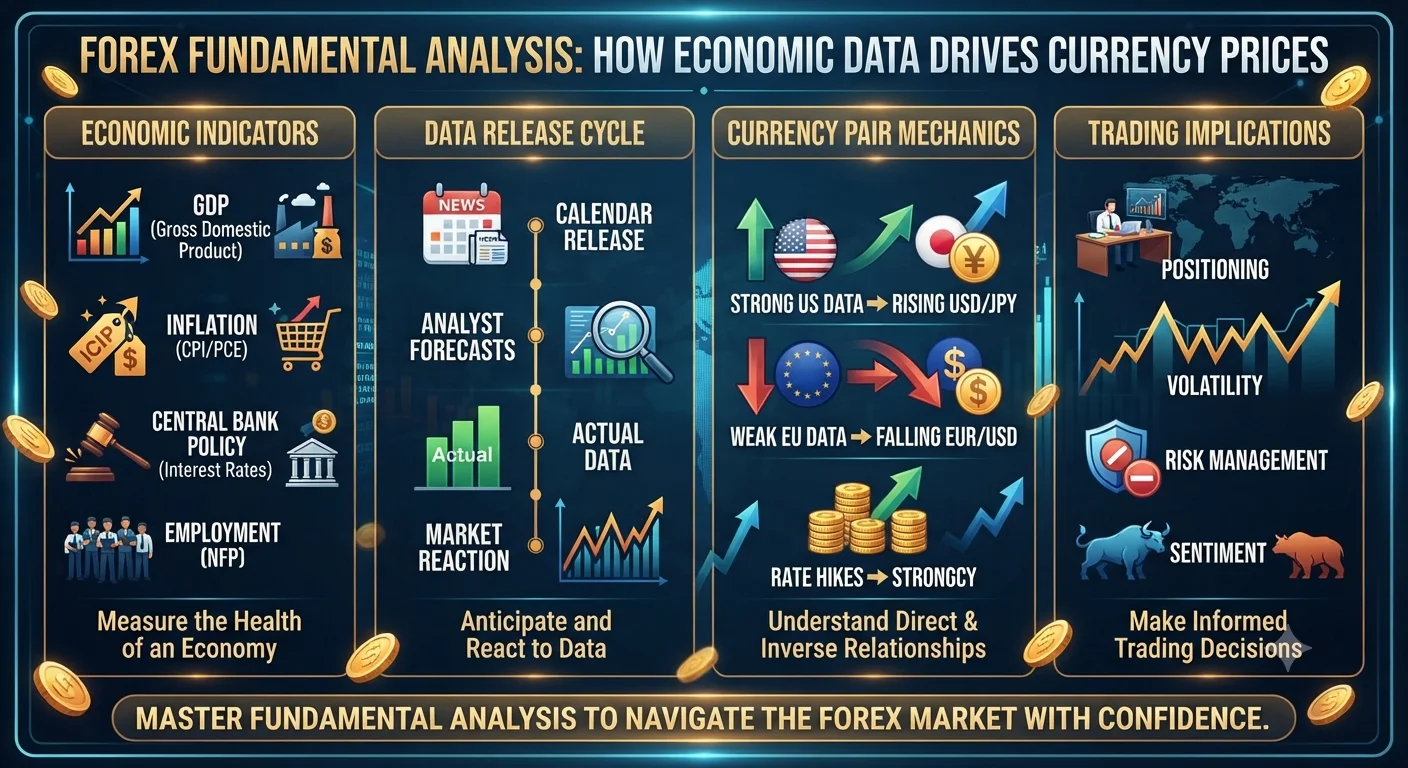
- Forex Fundamental Analysis: How Economic Data Drives Currency Prices
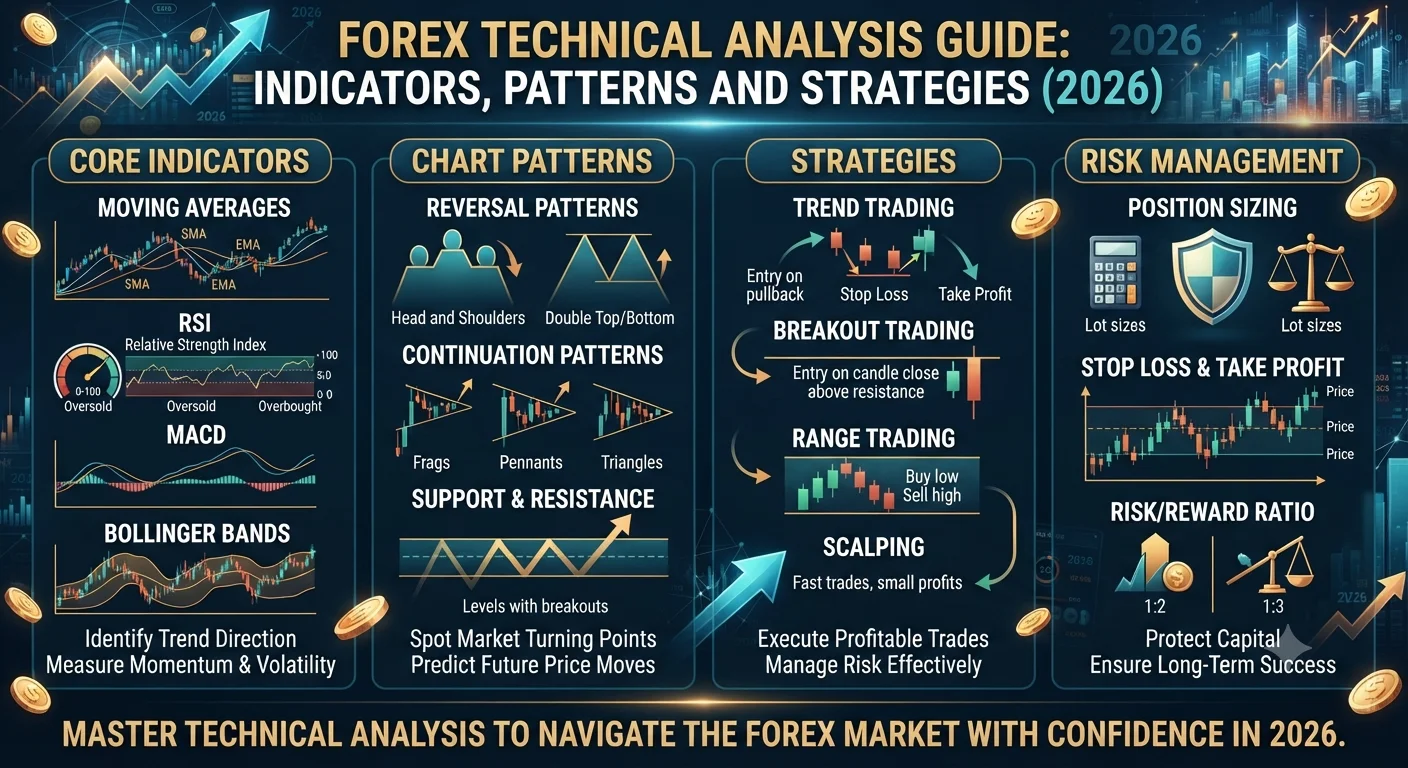
- Forex Technical Analysis Guide: Indicators, Patterns and Strategies (2026)
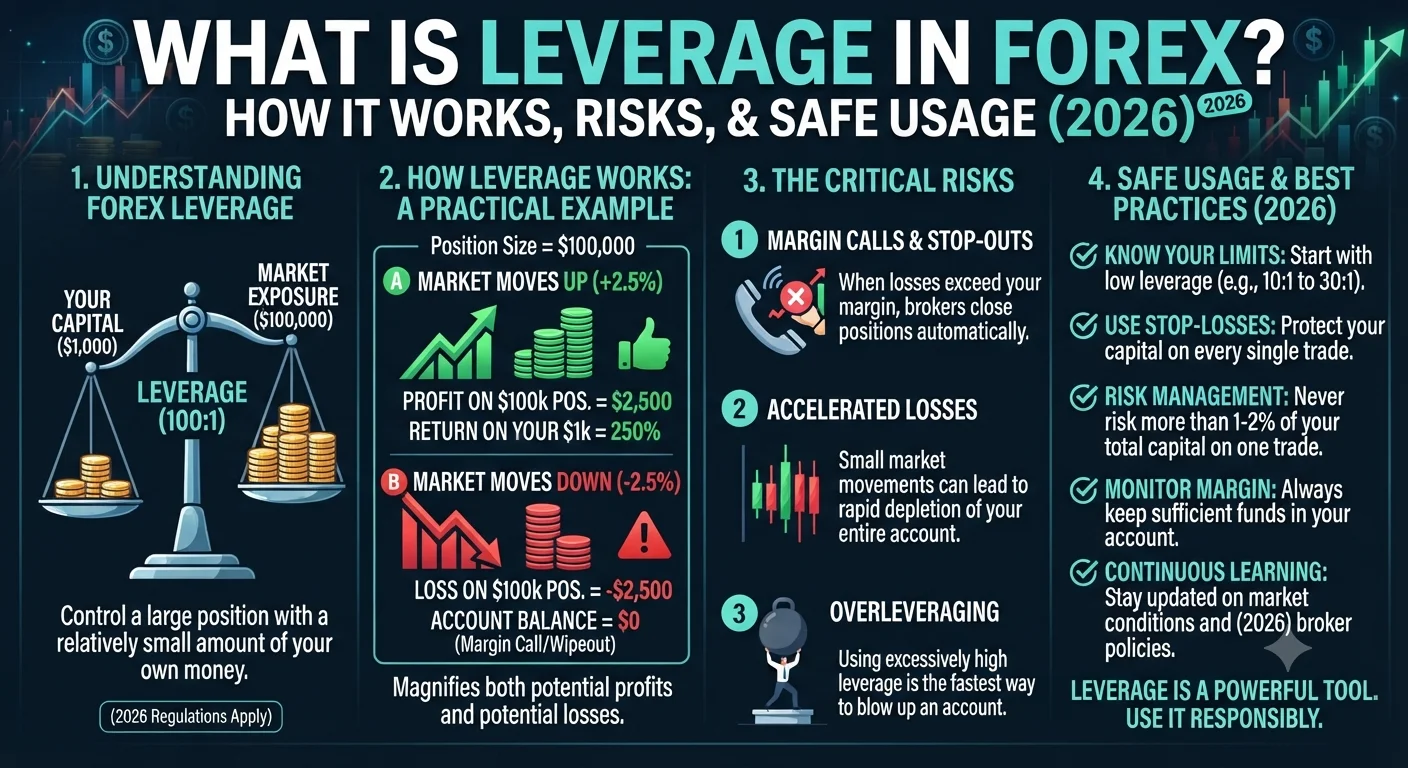
- What Is Leverage in Forex? How It Works, Risks, and Safe Usage (2026)
The pair's dominance reflects the economic weight of its constituents: the United States is the world's largest economy and the dollar is the world's primary reserve currency, while the Eurozone collectively represents the world's second largest economic bloc. The depth of liquidity in EUR/USD produces some of the tightest spreads available in retail forex, often as low as 0.5 to 1.0 pip with competitive brokers during peak trading hours.
Key fundamental drivers: The primary fundamental driver of EUR/USD is the divergence in monetary policy between the Federal Reserve and the European Central Bank. When the Fed is raising rates while the ECB holds or cuts, the interest rate differential favors the dollar and EUR/USD tends to fall. When the ECB is relatively more hawkish than the Fed, the opposite dynamic applies. Secondary drivers include relative economic growth rates between the US and Eurozone, risk appetite (the dollar tends to strengthen in risk-off environments), and Eurozone-specific political or financial stress events.
Trading characteristics: EUR/USD is most active and most liquid during the London-New York session overlap (1:00 PM to 5:00 PM GMT), when both the European and American financial centers are simultaneously active. The pair typically produces its largest daily moves during this overlap window, particularly around major US economic data releases and FOMC events.
Best suited for: All trader types and experience levels. The combination of tight spreads, abundant analytical coverage, predictable fundamental drivers, and clean technical behavior makes EUR/USD the ideal starting pair for beginners and the preferred trading vehicle for many experienced professionals.
USD/JPY: The Asian Session Powerhouse
USD/JPY, the exchange rate between the US dollar and the Japanese yen, is the second most traded currency pair globally, accounting for approximately 13 percent of daily turnover. The yen is unique among major currencies for its dual role as both a heavily traded currency and a global safe-haven asset that strengthens during periods of market stress.
Key fundamental drivers: The dominant long-term driver of USD/JPY is the interest rate differential between the Federal Reserve and the Bank of Japan. The BOJ's historically ultra-loose monetary policy maintained a persistently wide interest rate differential favoring the dollar, which kept USD/JPY in a sustained uptrend through much of the 2021 to 2024 period. The gradual normalization of BOJ policy from 2024 onward introduced a more dynamic and two-directional environment for the pair. Risk sentiment is also a major driver: when global risk appetite deteriorates, investors unwind yen-funded carry trades and buy yen, pushing USD/JPY lower regardless of the prevailing interest rate differential.
Trading characteristics: USD/JPY is most active during the Asian (Tokyo) session and the early part of the New York session. Bank of Japan policy announcements, Japanese trade balance data, and official comments from BOJ officials can produce sharp and sudden yen moves. Japanese Ministry of Finance verbal intervention warnings and actual BOJ intervention operations in the currency market add an additional layer of fundamental risk that is unique to yen pairs.
Best suited for: Intermediate to experienced traders comfortable with both interest rate differential analysis and safe-haven dynamics. The potential for sudden BOJ intervention-related volatility makes USD/JPY more complex than EUR/USD for beginners.
GBP/USD: Cable's Volatility and Opportunity
GBP/USD, known as "Cable" (a name derived from the transatlantic telegraph cable that transmitted prices between London and New York in the 19th century), is the third most traded major pair. GBP/USD typically carries higher volatility than EUR/USD, producing larger average daily ranges that create both greater profit potential and greater risk per trade.
Key fundamental drivers: Bank of England monetary policy is the primary driver. The UK's unique economic position outside the Eurozone since Brexit means that GBP is sensitive to UK-specific economic data and trade relationship developments that do not affect the euro. UK inflation data, employment reports, and BOE rate decisions are the highest-impact events for Cable. Brexit-related developments, while largely settled at a structural level, still occasionally produce sterling volatility when UK-EU trade or regulatory relationship issues resurface.
Trading characteristics: GBP/USD is most active during the London session (8:00 AM to 5:00 PM GMT) and shows significant volatility during UK economic data releases, which typically occur between 7:00 AM and 9:30 AM GMT. The pair's higher volatility relative to EUR/USD means that the same pip movement represents proportionally more risk per position, requiring careful position sizing adjustment.
Best suited for: Intermediate traders comfortable with higher volatility. The larger average daily ranges offer attractive profit potential for traders who can manage the risk appropriately.
USD/CHF: The Safe-Haven Pair
USD/CHF, the dollar-franc pair, reflects two currencies that both carry safe-haven characteristics in different contexts. The Swiss franc is a traditional crisis currency that strengthens when global financial stress increases. The US dollar is the world's reserve currency and also strengthens during severe risk-off episodes.
Key fundamental drivers: Swiss National Bank policy, US Federal Reserve policy, and risk sentiment all influence USD/CHF significantly. Because the CHF tracks the EUR closely due to Switzerland's deep economic integration with the Eurozone, USD/CHF often moves inversely to EUR/USD. This strong negative correlation means that traders who hold positions in both EUR/USD and USD/CHF simultaneously are effectively trading the same directional bet twice.
Trading characteristics: USD/CHF typically carries slightly wider spreads than EUR/USD and USD/JPY and has lower daily volume. It is most active during the European session. The SNB's quarterly meetings and its known history of direct currency market intervention make CHF pairs subject to occasional sharp policy-driven moves.
Recommended Articles
 FOREX TRADING BASICS
 FOREX TRADING BASICS
 FOREX TRADING BASICS
 FOREX TRADING BASICS
AUD/USD and NZD/USD: The Commodity-Linked Majors
AUD/USD (the Australian dollar vs the US dollar, nicknamed "the Aussie") and NZD/USD (the New Zealand dollar vs the US dollar, nicknamed "the Kiwi") are classified as commodity-linked currencies because their values are strongly influenced by global commodity prices and Chinese economic conditions.
Australia is the world's largest exporter of iron ore and a significant exporter of coal, natural gas, and agricultural commodities. When global commodity demand is strong, particularly from China (Australia's largest trading partner), AUD tends to strengthen. When commodity prices fall or Chinese economic data disappoints, AUD weakens regardless of domestic Australian economic conditions.
Both AUD and NZD are classified as risk-on currencies: they tend to appreciate when global investor risk appetite is healthy and depreciate during risk-off periods when investors reduce exposure to assets perceived as carrying higher risk. This sensitivity to global sentiment makes them responsive to a wider range of international macroeconomic developments than the major European or North American currencies.
Best suited for: Traders who follow commodity markets and Chinese economic data closely, and who are comfortable with the higher sensitivity to global risk sentiment shifts.
USD/CAD: The Petrocurrency Pair
USD/CAD (the US dollar vs the Canadian dollar, nicknamed "the Loonie") is unique among major pairs for its direct and well-documented sensitivity to crude oil prices. Canada is one of the world's largest oil exporters, and oil revenues represent a significant portion of Canadian export income. When oil prices rise, Canadian export revenue increases, supporting CAD and pushing USD/CAD lower. When oil prices fall, USD/CAD tends to rise.
Beyond oil sensitivity, USD/CAD is influenced by the relative monetary policy stances of the Federal Reserve and the Bank of Canada, the health of the US economy (as Canada's dominant trading partner), and North American trade policy dynamics.
Trading characteristics: USD/CAD is most active during the New York session. Major price movements often coincide with crude oil inventory reports (published by the US Energy Information Administration on Wednesdays) and Canadian employment data releases.
Most Traded Minor Pairs
EUR/GBP: The European Cross
EUR/GBP represents the exchange rate between the euro and the British pound, making it a pure play on the relative economic and monetary policy divergence between the Eurozone and the United Kingdom. It is one of the most liquid cross pairs and is particularly sensitive to UK-EU political and trade relationship developments.
The pair moves within a historically relatively narrow range compared to the dollar-based pairs, reflecting the close economic integration of its constituent economies. However, binary political events, such as Brexit votes, Bank of England or ECB surprises, and significant UK-EU trade policy shifts, can produce sharp short-term moves that offer strong trading opportunities.
EUR/JPY: The Risk Sentiment Barometer
EUR/JPY is one of the most widely traded cross pairs and serves as a barometer of broader risk sentiment in global markets. The euro is a growth-sensitive currency while the yen is a classic safe-haven. When global risk appetite is strong, EUR/JPY tends to rise as investors sell yen and buy risk assets. When risk appetite deteriorates, EUR/JPY tends to fall sharply as yen safe-haven buying overwhelms euro demand.
This pair typically carries higher volatility than most major pairs and is popular with more experienced traders seeking larger price movements.
GBP/JPY: The "Dragon" of Currency Trading
GBP/JPY has earned the informal nickname "the dragon" among forex traders for its combination of high volatility, large daily ranges, and the powerful, fast-moving price action it is known to produce. It combines the Bank of England policy dynamics of GBP with the BOJ policy and safe-haven yen dynamics of JPY.
| Currency Pair | Average Daily Range (Pips) | Typical Spread | Best Session | Primary Driver |
|---|---|---|---|---|
| EUR/USD | 70-100 | 0.5-1.5 | London/NY | Fed vs ECB policy |
| USD/JPY | 70-100 | 0.5-1.5 | Tokyo/NY | Fed vs BOJ, risk sentiment |
| GBP/USD | 100-150 | 1.0-2.0 | London | BOE policy, UK data |
| USD/CHF | 60-90 | 1.0-2.5 | European | SNB policy, risk sentiment |
| AUD/USD | 60-90 | 0.8-2.0 | Sydney/London | Commodities, China data |
| NZD/USD | 50-80 | 1.5-3.0 | Sydney | RBNZ policy, risk sentiment |
| USD/CAD | 70-100 | 1.0-2.5 | NY | Oil prices, BOC vs Fed |
| EUR/GBP | 40-70 | 1.0-2.5 | London | ECB vs BOE, UK-EU relations |
| EUR/JPY | 80-130 | 1.5-3.0 | London/Tokyo | Risk sentiment, ECB vs BOJ |
| GBP/JPY | 130-200 | 2.0-4.0 | London | Risk sentiment, BOE vs BOJ |
Which Currency Pair Is Best for Beginners in 2026?
EUR/USD is the universally recommended starting pair for beginners, and the reasoning is well-grounded in its practical characteristics:
Tightest spreads of any currency pair, typically 0.5 to 1.0 pip with competitive brokers, meaning transaction costs per trade are the lowest available. The highest liquidity of any currency pair means technical levels are more consistently respected and price spikes caused by thin markets are less common. The most abundant educational content, analysis, and community discussion of any pair, making it easier to learn and develop as a trader. Relatively clean technical behavior compared to more volatile pairs like GBP/JPY. A primary fundamental driver (Fed vs ECB policy divergence) that is well-documented, widely covered, and relatively straightforward to follow.
Once comfortable with EUR/USD, many traders add USD/JPY as a second pair, particularly if they trade during Asian session hours. GBP/USD is a logical third addition for traders who want additional volatility and profit potential in return for accepting slightly higher risk per pip of movement.
Key Takeaways
- The seven major currency pairs, all including the US dollar, account for the largest share of the $7.5 trillion daily forex market and offer the tightest spreads, deepest liquidity, and most reliable technical behavior.
- EUR/USD alone represents approximately 22 percent of global daily forex turnover and is the best starting pair for beginners due to its combination of tight spreads, deep liquidity, clean technical behavior, and abundant analytical coverage.
- USD/JPY is the second most traded pair and offers unique exposure to Japanese monetary policy dynamics and safe-haven flows, with its highest activity during the Tokyo and New York sessions.
- Commodity-linked currencies like AUD/USD and USD/CAD carry additional sensitivity to global commodity prices and trade flow dynamics that add fundamental complexity beyond pure monetary policy analysis.
- Minor pairs like EUR/JPY and GBP/JPY offer higher volatility and larger daily ranges but also wider spreads and more complex fundamental dynamics, making them more appropriate for experienced traders.
- Transaction costs, expressed as the spread relative to the average daily pip range, are meaningfully higher for exotic pairs than for the major pairs, making frequent trading of exotic pairs significantly more expensive on a percentage-of-profit basis.
Frequently Asked Questions
Why does the US dollar appear in most major currency pairs? The US dollar appears in approximately 88 percent of all forex transactions globally, according to BIS data, reflecting its status as the world's primary reserve currency, the dominant medium of international trade pricing, and the deepest and most liquid financial market in the world. Most international commodity contracts including oil, gold, and agricultural goods are priced in dollars, creating pervasive global demand for the currency that manifests as its presence in the vast majority of currency transactions.
What is the most volatile major currency pair? GBP/USD consistently produces the highest daily pip ranges among the seven major pairs, reflecting the British pound's sensitivity to UK-specific political and economic developments, Brexit-related uncertainties, and the Bank of England's policy dynamics. Among all commonly traded pairs including minor crosses, GBP/JPY is typically the most volatile, combining pound and yen characteristics into a pair that can move 150 to 200 pips per day in active sessions.
Are minor pairs riskier than major pairs? Minor pairs generally carry slightly higher trading costs (wider spreads) and sometimes less predictable technical behavior due to their lower liquidity compared to the major pairs. However, higher risk-to-reward opportunities exist in minor pairs precisely because of their higher volatility. The appropriate classification is that minor pairs are more expensive to trade and carry different risk characteristics than major pairs, rather than simply being categorically riskier in all respects.
Can I make money trading only one currency pair? Yes. Many successful professional traders focus exclusively on one or two currency pairs throughout their careers. Specialization allows you to develop deep expertise in the specific fundamental drivers, technical patterns, and behavioral quirks of your chosen pair, which many traders find produces better results than spreading attention across many pairs superficially. EUR/USD, with its deep liquidity, consistent behavior, and abundance of analytical resources, is the most common choice for traders who specialize in a single pair.
How do I choose between trading major and minor pairs? For beginners, starting with one or two major pairs is strongly recommended. As you develop proficiency with reading your primary pair's behavior and consistently executing your strategy, you can explore adding one or two additional pairs that offer different session activity or fundamental drivers. The key criterion for adding a new pair is whether you genuinely understand its specific fundamental drivers well enough to form a view on its likely direction, not simply whether it looks technically interesting on a chart.
RISK DISCLAIMER: Currency pair trading involves substantial risk of loss. This article is for educational purposes only and does not constitute financial advice. Spreads, volatility, and trading characteristics can change with market conditions. Always verify current information with your broker before trading.